National nonprofit research institute achieves three significant milestones as Candid, Salesforce, and Google recognize the organization's commitment to accountability, operational excellence, and public education. Truth Trench Think Tank is proud to announce three major organizational …

Social Security’s 2032 Deadline: What Happens to Your Benefits, and When
Social Security will not "go broke." But unless Congress acts, it will not be able to pay full benefits in about six years. On June 9, 2026, the Social Security Trustees released their annual report. It projects that the Old-Age and Survivors Insurance (OASI) trust fund, which pays retirement and …
Continue Reading about Social Security’s 2032 Deadline: What Happens to Your Benefits, and When →

Who Decides If America Goes to War? Congress, the President, and the Constitutional Balance of Power
Examining congressional war powers, presidential authority, appropriations, and the debate surrounding military action involving Iran. Why This Matters Questions surrounding U.S. military action against Iran have renewed a longstanding constitutional debate: Who has the authority to take …
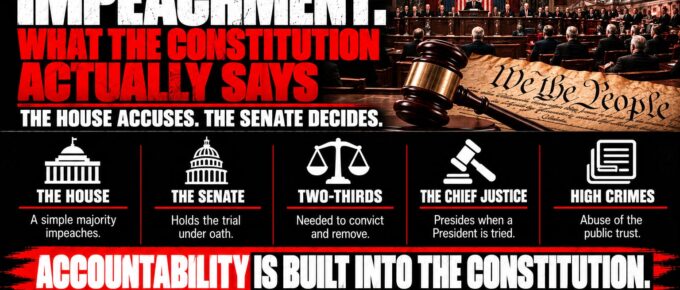
Impeachment: What the Constitution Actually Says
Impeachment is one of the most misunderstood tools in the Constitution. It is not a criminal trial, and being impeached is not the same as being removed. The Text How It Works What Are "High Crimes and Misdemeanors"? The phrase is not defined in the Constitution. Alexander Hamilton, …
Continue Reading about Impeachment: What the Constitution Actually Says →
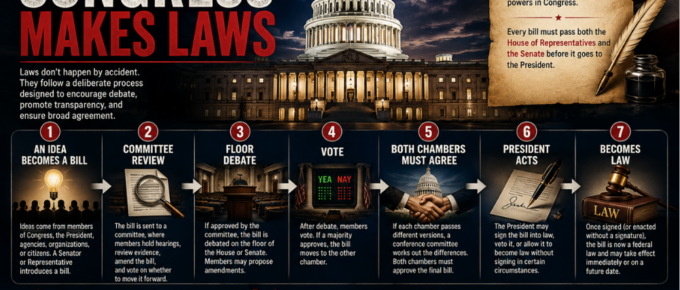
How Congress Makes Laws
Understanding the Legislative Process That Shapes Federal Policy Every federal law in the United States begins as an idea. Sometimes that idea comes from a member of Congress. Other times it comes from the President, a federal agency, a state government, a business, a nonprofit organization, …
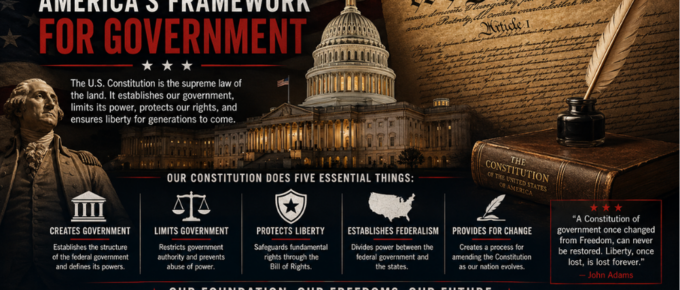
The Constitution: America’s Framework for Government
Understanding the Document That Defines the United States The United States Constitution is the foundation of the American system of government. It establishes how the federal government is organized, defines the powers of each branch, protects individual rights, and limits the government's …
Continue Reading about The Constitution: America’s Framework for Government →
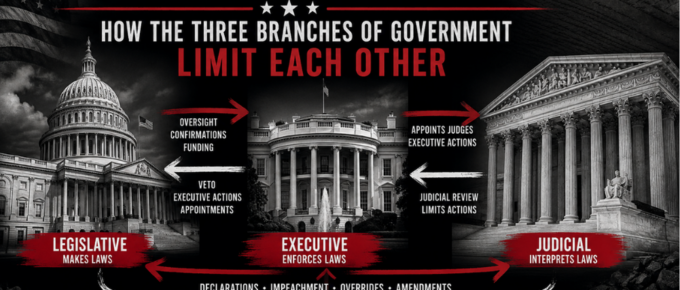
Checks and Balances: How the Three Branches of Government Limit Each Other
Understanding the Constitutional System That Prevents Any One Branch from Becoming Too Powerful When the Founding Fathers wrote the United States Constitution, they faced a difficult challenge. They wanted a national government strong enough to govern the country, defend the nation, and …
Continue Reading about Checks and Balances: How the Three Branches of Government Limit Each Other →
The Powers of the President of the United States
Understanding the Authority, Responsibilities, and Constitutional Limits of America's Chief Executive The President of the United States is one of the most recognizable and influential leaders in the world. Every day, the President makes decisions that affect national security, foreign policy, …
Continue Reading about The Powers of the President of the United States →
How Executive Orders Work
Understanding One of the President's Most Powerful Executive Tools Every time a new president takes office, headlines often announce that the President has signed dozens of executive orders. Some people believe executive orders are "laws." Others believe a president can simply sign an …
President Joe Biden’s Most Controversial Pardons: Who Was Pardoned and Why?
One of the President of the United States' greatest constitutional powers is the power to grant pardons. A presidential pardon can forgive federal crimes, restore certain rights, or even prevent federal prosecution before charges are ever filed. Every president has used this authority, but few …
Continue Reading about President Joe Biden’s Most Controversial Pardons: Who Was Pardoned and Why? →
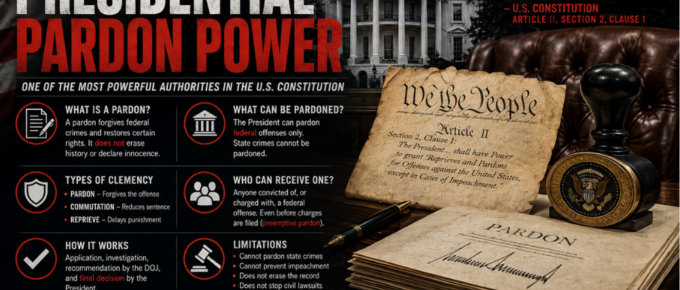
Understanding the Presidential Pardon Power
One of the Most Powerful Authorities Granted to the President of the United States The President of the United States has many important constitutional powers. The President serves as Commander in Chief of the military, signs or vetoes legislation, appoints federal judges, negotiates treaties, …
Continue Reading about Understanding the Presidential Pardon Power →

Truth Trench Think Tank Earns Candid’s 2026 Platinum Seal of Transparency
National nonprofit research institute recognized with Candid's highest level of transparency, demonstrating exceptional commitment to accountability, measurable impact, and public trust. Truth Trench Think Tank is proud to announce that it has earned Candid's 2026 Platinum Seal of …
Continue Reading about Truth Trench Think Tank Earns Candid’s 2026 Platinum Seal of Transparency →

Truth Trench Think Tank Retains Salesforce Enterprise Grant Valued at More Than $300,000
Global technology leader Salesforce continues to invests resources into nonprofits - Truth Trench Think Tank gains Enterprise-level technology grant, strengthening the organization's capacity for research, civic engagement, and nationwide impact. FOR IMMEDIATE RELEASE Truth Trench …
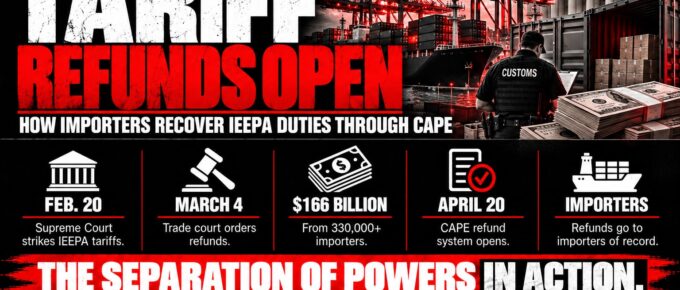
Tariff Refunds Open: How Importers Can Recover IEEPA Duties Through CBP’s New CAPE System
The Supreme Court ruled the tariffs unlawful in February. As of yesterday, importers can start getting their money back. On April 20, 2026, at 8:00 a.m. Eastern, U.S. Customs and Border Protection launched CAPE, the system it built to process refunds of duties collected under the International …
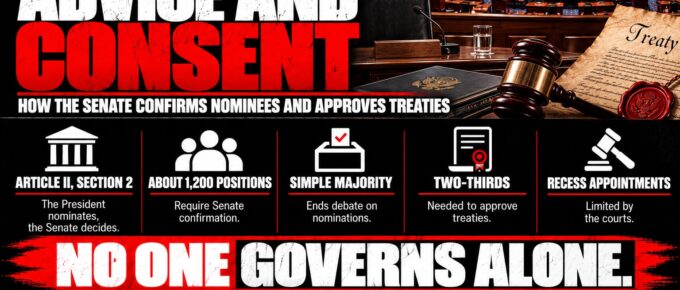
Advice and Consent: How the Senate Confirms Nominees and Approves Treaties
The President cannot staff the government or bind the nation to a treaty alone. Article II, Section 2 gives the President power to make treaties "by and with the Advice and Consent of the Senate, provided two thirds of the Senators present concur," and to nominate ambassadors, Supreme Court …
Continue Reading about Advice and Consent: How the Senate Confirms Nominees and Approves Treaties →
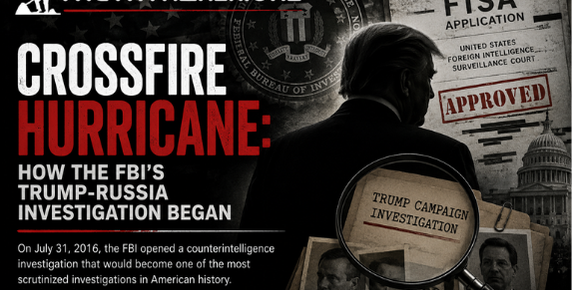
Crossfire Hurricane: How the FBI’s Trump-Russia Investigation Began
On July 31, 2016, the Federal Bureau of Investigation (FBI) opened a counterintelligence investigation that would become known as Crossfire Hurricane. Over the following several years, the investigation became one of the most scrutinized federal investigations in American history, prompting …
Continue Reading about Crossfire Hurricane: How the FBI’s Trump-Russia Investigation Began →

Truth Trench Think Tank Awarded Google Ad Grants Program, Unlocking Up to $120,000 Annually in Search Advertising
National nonprofit research institute expands its ability to educate, inform, and engage Americans through Google's Ad Grants program for eligible charitable organizations. FOR IMMEDIATE RELEASE Truth Trench Think Tank is proud to announce that it has been accepted into the Google Ad …
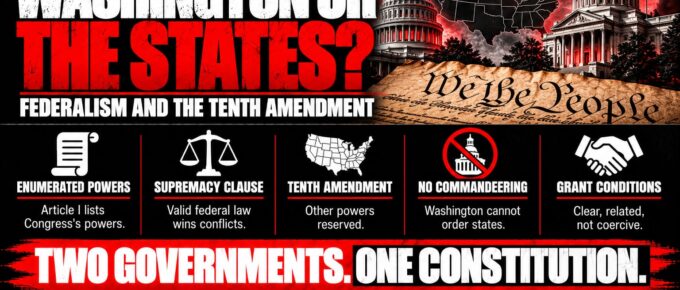
Federalism and the Tenth Amendment: Who Holds Power, Washington or the States?
Americans live under two governments at once, national and state, and the Constitution divides power between them on purpose. The Founders called this a "compound republic." James Madison wrote in Federalist No. 45 that the powers delegated to the federal government are "few and defined," while …
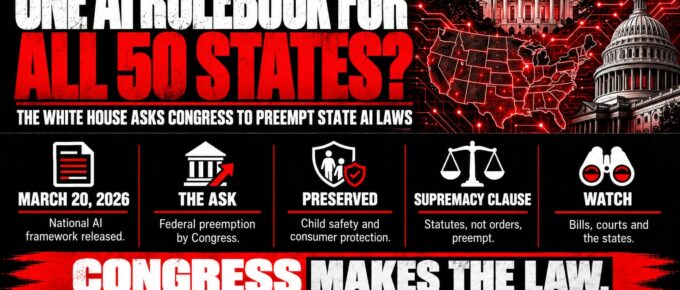
The White House Asks Congress to Preempt State AI Laws: Inside the National AI Policy Framework
The administration has asked Congress to do what an executive order cannot: write a national AI rulebook that overrides the states. On March 20, 2026, the White House released a National Policy Framework for Artificial Intelligence, a four-page set of legislative recommendations to Congress. It …
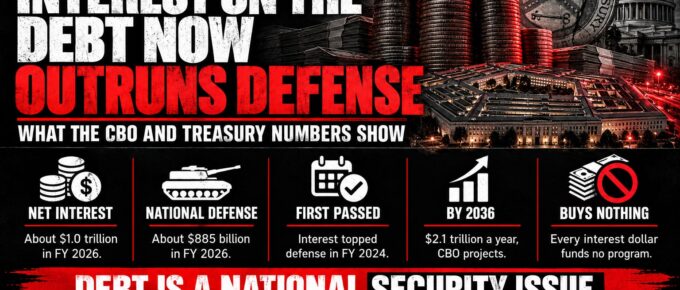
Interest on the National Debt Now Costs More Than Defense: What the Numbers Show
America now spends more on interest than on its military. That is not a slogan. It is the Congressional Budget Office's projection for fiscal year 2026, and the first quarter of the year confirmed it. Between October and December 2025, the federal government paid $270.3 billion in net interest …
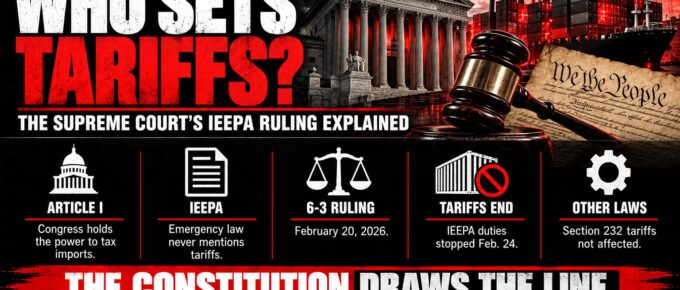
Who Sets Tariffs, Congress or the President? The Supreme Court’s IEEPA Ruling Explained
The Constitution gives the power to tax imports to Congress. For decades, Congress has lent pieces of that power to the President. In 2026, the Supreme Court drew a line. What the Constitution Says Article I, Section 8 gives Congress the power "to lay and collect Taxes, Duties, Imposts and …
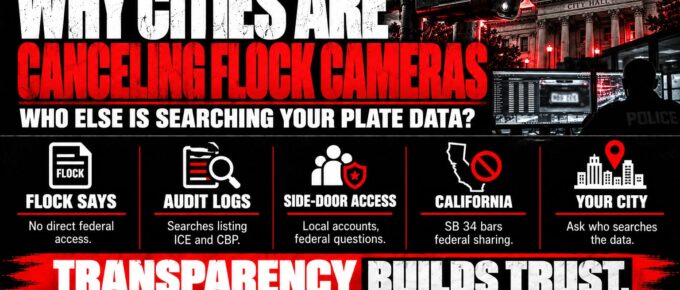
Why Some Cities Are Canceling Their Flock License Plate Camera Contracts
A growing number of communities are asking a question they did not ask when they bought license plate cameras: who else is searching the data? This week, NPR reported on cities canceling or reconsidering contracts with Flock Safety, the largest provider of automated license plate readers (ALPRs) …
Continue Reading about Why Some Cities Are Canceling Their Flock License Plate Camera Contracts →
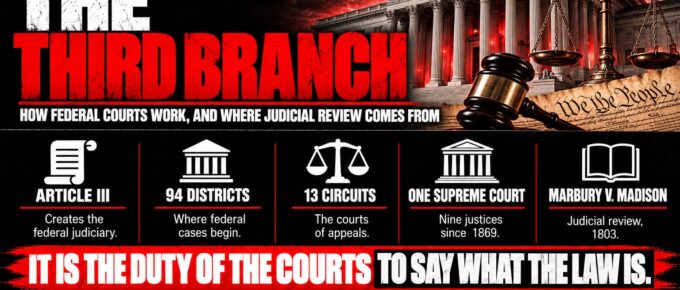
The Third Branch: How Federal Courts Work, and Where Judicial Review Comes From
The judicial branch has no army and no budget of its own. Alexander Hamilton called it the "least dangerous" branch. Yet its decisions can reshape the entire government. What Article III Says Article III vests the judicial power in "one supreme Court" and in lower courts that Congress chooses …

REAL ID, the $45 ConfirmID Fee and Airport Facial Recognition: What TSA Collects and How to Opt Out
Getting through airport security now involves two separate federal decisions about your identity: whether your ID is good enough, and whether you let a camera match your face to it. REAL ID: What Is Required The REAL ID Act of 2005 set federal security standards for state driver's licenses and …
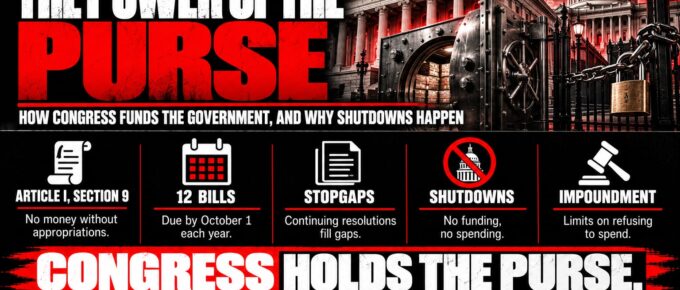
The Power of the Purse: How Congress Funds the Government, and Why Shutdowns Happen
Of all the powers the Constitution gives Congress, the power of the purse may be the most important. Article I, Section 9 states: "No Money shall be drawn from the Treasury, but in Consequence of Appropriations made by Law." The executive branch can spend only what Congress has approved, for the …