Electronic voting systems have transformed the administration of elections across the United States by increasing efficiency, improving accessibility, and accelerating vote tabulation. From voter registration databases and electronic poll books to ballot scanners and tabulation software, modern election infrastructure relies on a complex network of interconnected technologies that support every stage of the electoral process.
With that technological advancement comes an equally important responsibility: protecting these systems from cyber threats, technical failures, insider risks, and other potential vulnerabilities. Election security has become a national priority involving federal agencies, state election officials, local jurisdictions, private technology vendors, and independent cybersecurity experts working together to strengthen public confidence in the electoral process.
As part of our Election Integrity Research Series, Truth Trench Think Tank encourages readers to review publicly available government reports, technical assessments, and official documents examining vulnerabilities within electronic voting and ballot-counting systems. These materials provide valuable insight into how election infrastructure operates, where potential risks have been identified, and what safeguards have been developed to protect America’s elections.
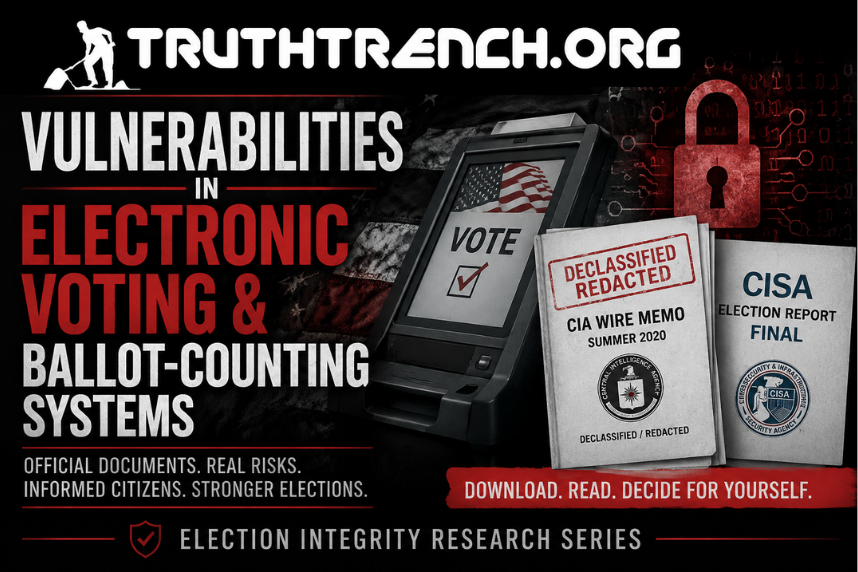
Modern Election Infrastructure
The term election infrastructure encompasses much more than voting machines. It includes every technological and administrative component necessary to conduct an election from voter registration through certification.
Modern election infrastructure commonly includes:
- State voter registration databases
- Electronic poll books
- Ballot-marking devices
- Optical ballot scanners
- Vote tabulation systems
- Election management software
- Election reporting systems
- Network infrastructure
- Physical security controls
- Administrative procedures and personnel
Each component performs a specific function within the election process and is subject to varying levels of security, oversight, testing, and certification.
Understanding Potential Vulnerabilities
No complex technology is entirely free from risk. Like banking systems, electric utilities, transportation networks, and healthcare infrastructure, election systems are routinely evaluated to identify weaknesses before they can be exploited.
Potential vulnerabilities may include:
- Cybersecurity threats
- Software vulnerabilities
- Hardware failures
- Supply chain risks
- Insider threats
- Human error
- Network security weaknesses
- Physical security concerns
- Data integrity issues
Identifying these vulnerabilities does not necessarily indicate that they have been exploited. Rather, vulnerability assessments are designed to improve security by identifying weaknesses and recommending corrective actions before problems occur.
Election Security Is a Continuous Process
Election security is not a one-time event conducted before Election Day. It is an ongoing process that includes planning, testing, monitoring, auditing, and continuous improvement throughout the election cycle.
Security measures commonly include:
- Logic and accuracy testing
- Pre-election certification
- Cybersecurity assessments
- Physical security protocols
- Chain-of-custody procedures
- Post-election audits
- Risk-limiting audits where authorized
- Independent testing and certification
- Incident response planning
These layers of security are intended to provide redundancy, increase resilience, and strengthen confidence in election administration.
Why Government Reports Matter
Federal agencies periodically evaluate election infrastructure as part of their broader responsibility to protect critical national infrastructure. These reports often examine emerging technologies, cybersecurity threats, intelligence assessments, best practices, and recommendations for improving election security.
Publicly available government documents allow citizens to better understand how election systems function, what challenges have been identified, and how agencies seek to reduce potential risks.
Rather than relying solely on commentary or summaries, reviewing original government publications provides readers with the opportunity to evaluate the information directly.
Access the Original Documents
Several of the reports referenced in this research series were originally published through WhiteHouse.gov and other federal government websites.
Because many of these documents are exceptionally large, Truth Trench Think Tank does not host copies of every file. Readers are encouraged to obtain the official versions directly from WhiteHouse.gov and other original government sources to ensure access to the complete materials, supporting appendices, and any future updates.
Election Integrity Research Series
Continue exploring the series:
Table of contents: Election Integrity Research Series: Truth Trench Think Tank
- Vulnerabilities in Electronic Voting & Ballot-Counting Systems
- China’s Acquisition and Exploitation of American Voter Data
- Michigan Voter-Registration Investigation
- Noncitizens on State Voter Rolls
Research Transparency
Truth Trench Think Tank is committed to publishing source-based research grounded in publicly available government documents, legislation, court records, official reports, and other primary source materials. Our mission is to improve public understanding by providing factual context and encouraging readers to examine original sources before forming their own conclusions.
The government documents referenced in this article remain the work of their original publishers. Truth Trench Think Tank references these materials solely for educational, research, and archival purposes in furtherance of its mission to advance civic understanding through transparent, source-based research.